



 09:31 2026-04-30
The year 2026 became an official point of no return. Robots ceased to be clumsy tin cans and stepped out of laboratory tests into autonomous operation. They began to surpass human records not only in chess but also on the running track. If a year ago, most robots at the Beijing half‑marathon were remotely controled, this year, 40% moved autonomously.
 707
707 8
8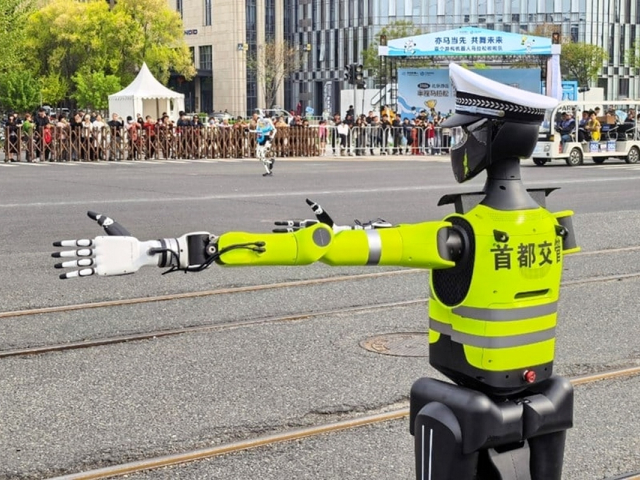
Lightning — faster than wind and human limits
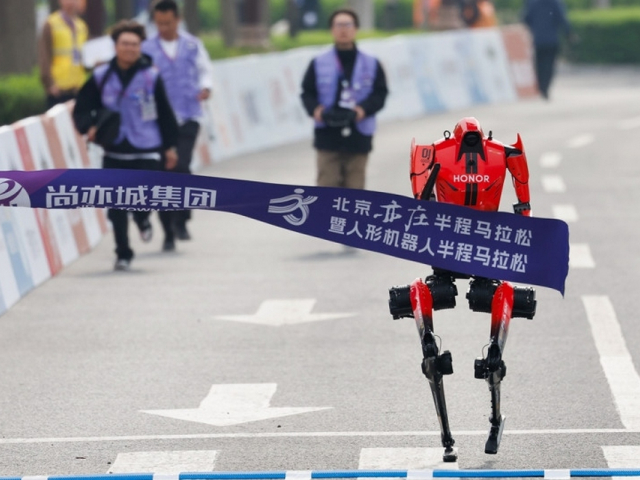
Moreover, humanoid robot Lightning from Honor completed a 21 km distance in a phenomenal 50 minutes 26 seconds. That is not just fast — it is almost seven minutes better than the men’s world record (57:20). In 2025, robots needed nearly three hours simply to finish. The current result demonstrates an exponential leap. Lightning ran fully autonomously, using liquid cooling and “physical AI” algorithms that model the biomechanics of professional athletes.
Traffic‑regulator robot and voice of safety
At the same Beijing marathon, a traffic‑management robot drew attention. It did not run. It stood at complex sections of the route and directed participants with gestures and voice. The robot autonomously measured runner density, offered hydration advice, and warned of upcoming turns. This is an example of “soft” integration of robots into public space. They are becoming part of the urban environment, providing services and interacting with people in natural language, which greatly simplifies logistics at mass events.
Stadium guards for World Cup 2026
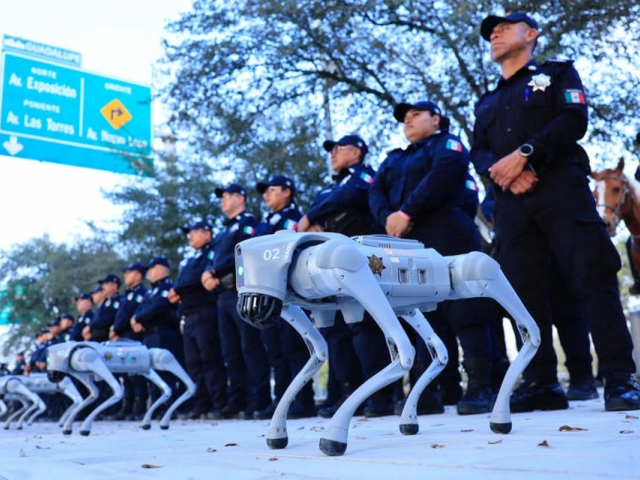
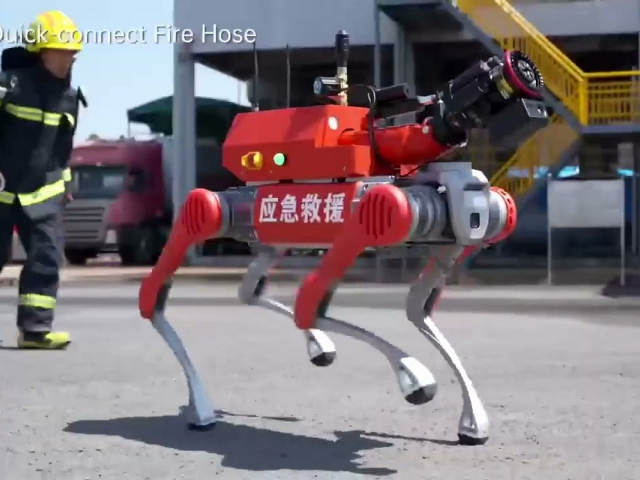
Mexico is preparing for the 2026 FIFA World Cup with swarm intelligence. In Monterrey, authorities unveiled the K9 X division — robotic patrol dogs equipped with thermal imagers, motion sensors, and facial‑recognition systems. These four‑legged guards can patrol high‑traffic zones and stream live video to a control center. Their main task is preventing unrest and detecting prohibited items in crowds. Robodogs are an answer to security challenges at mass events where human resources are traditionally insufficient.
Edward Varhocki — scourge of wild boars
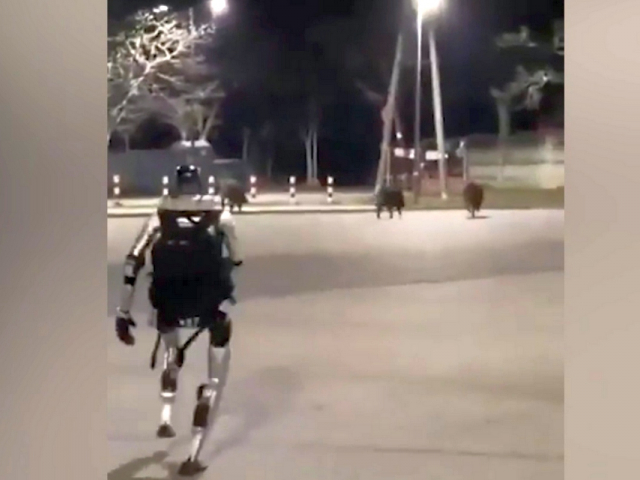
In Warsaw, a robot named Edward Varhocki (based on Unitree G1) became a social‑media star. A viral video showing the humanoid driving a herd of wild boars back into the forest while shouting “Go away!” in Polish gathered millions of views. Although it later emerged to be a promo, Edward became a hero. The case highlighted a trend: robots are becoming tools for tackling urban problems that people cannot or prefer not to handle. Now, Edward is a frequent guest on morning shows and even in corridors of the Polish parliament.
Deep‑sea and high‑altitude rescuers
The X30 series robotic dogs from Deep Robotics officially joined search‑and‑rescue services in several countries this year. With IP67 protection, they operate in chemical spill zones and flooded basements where a human would die in seconds. During recent drills, the robots negotiated 45‑degree collapses and crawled through narrow scaffolding. Their ability to work in tandem with drones for area reconnaissance makes them indispensable in earthquake response and industrial disaster relief.
Surgeon‑partner without trembling hands
In medicine, 2026 marked a breakthrough in autonomous cardiac surgery. New systems from Philips and Relievant learned to adjust an operation plan in real time. Where robots were once merely extensions of a surgeon’s hands, AI controllers now autonomously guide manipulators inside blood vessels and the heart, synchronizing with the patient’s breathing rhythm. This allows tumor removal and stent placement with micron‑level precision, reducing patient recovery time threefold. The robot is no longer just a tool, but it is a full surgical partner.
Optimus Gen 3 — from labs to factory floor
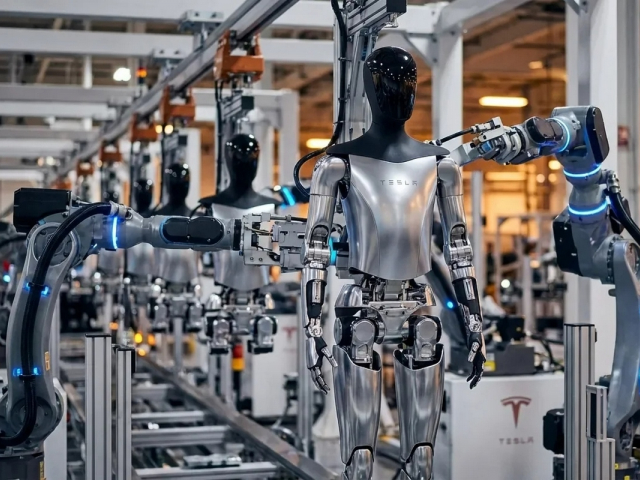
In March 2026, Elon Musk announced a large‑scale deployment of Tesla Optimus Gen 3 at the Fremont factory. This is the first generation of robots intended for real work rather than demonstrations. The new iteration features alarming precision: the robot’s hands have 22 degrees of freedom, enabling it to fold laundry, open doors, and even tear paper towels correctly. Robots no longer merely stand at assembly lines — they are integrating into homes and industrial environments as full assistants, capable of learning via video forecasts (FutureVision).
LG CLOiD —Jetsons in every kitchen
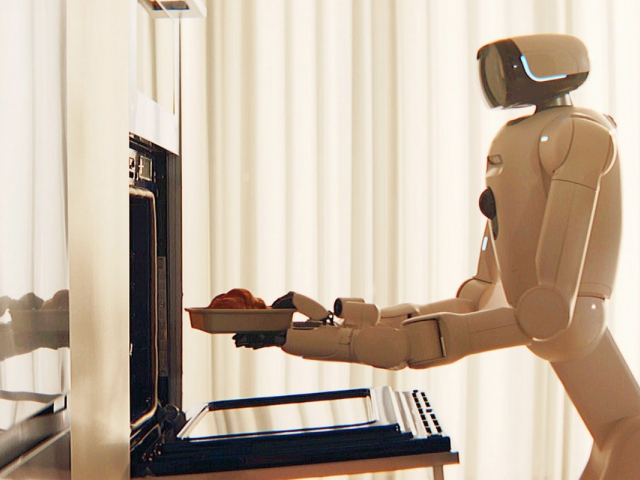
At CES 2026, LG unveiled CLOiD — a domestic robot that finally answers the question, "Who does the dishes?" This is no longer a vacuum cleaner but a humanoid assistant integrated into a smart‑home ecosystem. CLOiD can load a dishwasher and prepare simple meals, automatically dosing ingredients. It uses next‑generation tactile sensors to avoid breaking fragile glassware and to handle food gently when taking items from the refrigerator. The dream of a robot housekeeper from the 1960s cartoons has at last reached serial production.


-
Grand Choice
Contest by
InstaForexInstaForex always strives to help you
fulfill your biggest dreams.JOIN CONTEST -
Chancy DepositDeposit your account with $3,000 and get $1000 more!
In August we raffle $1000 within the Chancy Deposit campaign!
Get a chance to win by depositing $3,000 to a trading account. Having fulfilled this condition, you become a campaign participant.JOIN CONTEST -
Trade Wise, Win DeviceTop up your account with at least $500, sign up for the contest, and get a chance to win mobile devices.JOIN CONTEST


